| ■ 영문 제목 : Digital Utility Market Report by Technology (Hardware, Integrated Solutions), Network (Power Generation, Transmission and Distribution, Retail), and Region 2025-2033 | |
 | ■ 상품 코드 : IMA8339MU883 ■ 조사/발행회사 : IMARC ■ 발행일 : 2025년 2월 ■ 페이지수 : 약100 ■ 작성언어 : 영어 ■ 보고서 형태 : PDF + Excel ■ 납품 방식 : E메일 (주문 후 3영업일) ■ 조사대상 지역 : 글로벌 ■ 산업 분야 : 에너지 |
| Single User (1명 열람용) | USD3,999 ⇒환산₩5,398,650 | 견적의뢰/주문/질문 |
| Corporate License (동일기업내 공유가능) | USD5,999 ⇒환산₩8,098,650 | 견적의뢰/주문/질문 |
|
※가격옵션 설명 - 납기는 즉일~2일소요됩니다. 3일이상 소요되는 경우는 별도표기 또는 연락드립니다. - 지불방법은 계좌이체/무통장입금 또는 카드결제입니다. |
| 전 세계 디지털 유틸리티 시장 규모는 2752억달러에 달했습니다. 향후 전망을 보면, IMARC Group은 이 시장이 5830억달러에 이를 것으로 예상하며, 2025년부터 2033년까지 연평균 성장률(CAGR)은 8%를 기록할 것으로 전망합니다. 효율적이고 지속 가능하며 고객 중심의 유틸리티 서비스에 대한 수요 증가, 유틸리티 산업의 지속적인 기술 발전 및 디지털 솔루션 혁신, 그리고 신흥 시장의 경제 성장 및 산업화 가속화는 시장을 견인하는 주요 요인들입니다. 디지털 유틸리티는 운영, 효율성 및 고객 참여를 향상시키기 위해 유틸리티 산업 내에 첨단 기술을 도입하는 것을 의미합니다. 디지털 채널, 고급 분석, 자동화 및 상호 연결된 시스템을 통합한 디지털 유틸리티는 기존의 유틸리티 인프라와 혁신적인 디지털 솔루션의 통합에 중점을 둡니다. 이러한 통합은 성능 최적화, 지속 가능성 향상 및 변화하는 에너지 환경에 적응할 수 있는 능력을 가져옵니다. 디지털 유틸리티의 주요 특징으로는 시너지 효과를 발휘하는 실시간 데이터 처리, 원격 모니터링, 예측 분석, 지능형 의사 결정 등이 있습니다. 기술 플랫폼을 활용함으로써 디지털 유틸리티는 보다 신속하고 민첩한 운영 환경을 조성하여, 기존의 유틸리티 체계를 고객 중심적이고 효율적인 시스템으로 전환합니다. 글로벌 시장은 효율적이고 지속 가능하며 고객 중심의 유틸리티 서비스에 대한 수요 증가에 의해 주도되고 있으며, 이는 유틸리티 부문 내 디지털 솔루션의 전 세계적인 도입을 촉진하고 있습니다. 이러한 수요는 특히 도시화 가속화, 소비자 기대치 상승, 그리고 환경적 지속 가능성에 대한 강조가 커짐에 따라 더욱 부추겨지고 있습니다. 이에 발맞추어 스마트 그리드, 사물인터넷(IoT) 기기, 데이터 분석의 통합은 에너지 배전 네트워크 관리 개선에 기여함으로써 시장을 견인하고 있습니다. 또한 재생 가능 에너지 원에 대한 관심이 높아지고 이를 기존 유틸리티 인프라에 원활하게 통합하려는 움직임이 시장을 더욱 견인하고 있습니다. 더불어 에너지 효율성, 탄소 감축, 재생 가능 에너지 원 사용을 촉진하는 청정 에너지 이니셔티브에 대한 규제적 압력과 정부의 지원은 유틸리티 부문 내 디지털 솔루션 도입을 더욱 가속화하고 있습니다. 디지털 유틸리티 시장 동향/성장 동인: 지속적인 기술 발전과 혁신 지속적인 기술 발전은 유틸리티 산업의 디지털 솔루션 시장 확대에 결정적인 역할을 합니다. 인공지능, 머신러닝, 클라우드 컴퓨팅과 같은 분야의 혁신은 유틸리티 공급업체의 운영 방식을 변화시키고 있습니다. 이러한 기술은 보다 지능적인 데이터 분석, 예측 유지보수, 변화하는 상황에 대한 동적 대응을 가능하게 합니다. 예를 들어, 인공지능을 적용하여 에너지 배분을 최적화하고, 낭비를 줄이며, 잠재적인 시스템 장애가 발생하기 전에 이를 예측할 수 있습니다. 머신러닝 알고리즘은 소비 패턴을 파악하는 데 도움을 주어, 보다 효과적인 수요 관리와 고객 서비스를 가능하게 합니다. 클라우드 컴퓨팅은 서로 다른 부서와 지리적 위치 간 원활한 협업과 데이터 공유를 용이하게 합니다. 이러한 첨단 기술의 통합은 운영 효율성을 높일 뿐만 아니라 혁신을 촉진하여 성장과 경쟁력을 위한 새로운 길을 열어줍니다. 기술적 우수성을 향한 끊임없는 추구는 유틸리티 사업자가 급변하는 세상의 요구를 더 잘 충족할 수 있도록 하며, 시장 확장의 근본적인 동력으로 작용합니다. 지속 가능성과 기후 목표를 향한 전 세계적 전환 지속 가능성에 대한 시급한 요구와 기후 목표 달성을 위한 전 세계적 노력은 유틸리티 사업자들이 운영 전략을 재고하도록 압박하고 있습니다. 전 세계적으로 정부, 기관, 사회는 탄소 발자국 감축, 에너지 효율 증진, 재생 에너지 도입을 위해 적극적으로 노력하고 있습니다. 에너지 생산과 소비가 환경적 지속 가능성에 중대한 영향을 미치므로, 유틸리티 부문은 이러한 노력에서 핵심적인 역할을 수행합니다. 디지털 기술은 에너지 사용에 대한 모니터링, 제어 및 최적화를 개선함으로써 이러한 과제에 대한 해결책을 제공합니다. 예를 들어, 스마트 그리드는 재생 에너지원의 통합을 촉진하여 안정적이고 지속 가능한 에너지 공급을 보장합니다. 에너지 관리 시스템은 실시간 데이터를 활용하여 산업, 상업 및 주거 부문 전반에 걸쳐 에너지 절약을 촉진합니다. 디지털 솔루션이 글로벌 환경 우선순위와 조화를 이루는 것은 책임감 있고 지속 가능한 에너지 미래에 기여하며, 이는 시장을 견인하는 강력한 동력입니다. 신흥 시장의 경제 성장 및 산업화 가속화 신흥 경제국의 급속한 경제 성장과 산업화는 유틸리티 부문에 상당한 기회를 제공합니다. 이러한 지역이 지속적으로 도시화되고 산업적으로 발전함에 따라, 신뢰할 수 있고 효율적이며 상호 연결된 유틸리티 서비스에 대한 수요도 비례하여 증가하고 있습니다. 현대적인 유틸리티 기업들은 인구 밀도가 높은 도시, 급성장하는 산업, 그리고 급속히 확장되는 인프라 네트워크에 에너지를 공급해야 하는 과제를 해결해야 합니다. 디지털 솔루션은 복잡한 에너지 수요를 관리할 수 있는 지능형 시스템을 제공함으로써 이러한 과제를 해결하는 데 필수적인 역할을 합니다. 스마트 그리드, 고급 분석 및 자동화 기술의 도입을 통해 유틸리티 공급업체는 안정적인 에너지 공급을 보장하고, 비용을 절감하며, 서비스 품질을 향상시킬 수 있습니다. 또한, 신흥 시장의 고유한 과제와 기회는 현지 요구와 여건에 맞춘 혁신적인 접근 방식을 필요로 합니다. 디지털 유틸리티 산업 세분화: IMARC Group은 글로벌 디지털 유틸리티 시장 보고서의 각 세그먼트별 주요 동향 분석과 함께 2025년부터 2033년까지의 글로벌, 지역 및 국가별 전망을 제공합니다. 본 보고서는 기술 및 네트워크를 기준으로 시장을 분류했습니다. 기술별 세분화: 하드웨어 스마트 그리드 스마트 계량기 변압기 통합 솔루션 서비스 클라우드 및 소프트웨어 하드웨어가 가장 큰 시장 세그먼트를 차지함 본 보고서는 기술을 기반으로 한 시장의 상세한 세분화 및 분석을 제공합니다. 여기에는 하드웨어(스마트 그리드, 스마트 계량기, 변압기)와 통합 솔루션(서비스, 클라우드 및 소프트웨어)이 포함됩니다. 보고서에 따르면, 하드웨어가 가장 큰 세그먼트를 차지했습니다. 하드웨어 부문의 주요 성장 동인은 에너지 효율에 대한 수요 증가, 발전 및 소비 최적화의 필요성, 그리고 정확한 에너지 사용 데이터에 대한 요구입니다. IoT 및 AI와 같은 기술 발전 또한 더욱 정교하고 효율적인 하드웨어의 길을 열어주었습니다. 반면, 통합 솔루션 부문의 주요 성장 동인은 에너지 효율에 대한 수요 증가, 발전 및 소비 최적화의 필요성, 그리고 정확한 에너지 사용 데이터에 대한 요구입니다. IoT 및 AI와 같은 기술 발전 또한 더욱 정교하고 효율적인 하드웨어의 길을 열어주었습니다. 네트워크별 분류: 송배전 부문이 시장 점유율의 대부분을 차지합니다 발전 송배전 소매 본 보고서는 네트워크를 기반으로 한 시장에 대한 상세한 분류 및 분석을 제공합니다. 여기에는 발전, 송배전, 소매 부문이 포함됩니다. 보고서에 따르면, 송배전 부문이 가장 큰 비중을 차지했습니다. 발전 부문에서 디지털 유틸리티의 주요 동인으로는 전 세계적인 재생 에너지로의 전환, 발전 설비의 실시간 모니터링 및 제어 필요성, 운영 비용 절감과 신뢰성 향상을 위한 예측 유지보수 수요가 있습니다. 반면, 송배전 부문을 주도하는 핵심 요인은 전력망 현대화의 필요성, 손실을 최소화한 효율적인 전력 송전, 그리고 사전 예방적인 고장 감지 및 해결입니다. 네트워크 가시성 및 제어 능력 향상에 대한 요구 또한 디지털 기술 도입을 촉진하고 있습니다. 또한, 소매 부문의 주요 동인으로는 고객 서비스 개선, 맞춤형 제안 제공, 그리고 전기차 충전 인프라에 대한 증가하는 추세가 포함됩니다. 지역별 분류: 북미 미국 캐나다 유럽 독일 프랑스 영국 이탈리아 스페인 기타 아시아 태평양 중국 일본 인도 대한민국 호주 인도네시아 기타 라틴 아메리카 브라질 멕시코 기타 중동 및 아프리카 북미는 디지털 유틸리티 시장 점유율에서 압도적인 우위를 차지하고 있습니다 이 보고서는 또한 북미(미국 및 캐나다), 유럽(독일, 프랑스, 영국, 이탈리아, 스페인 및 기타 국가), 아시아 태평양(중국, 일본, 인도, 한국, 호주, 인도네시아 및 기타); 라틴 아메리카(브라질, 멕시코 및 기타); 중동 및 아프리카를 포괄하는 모든 주요 지역 시장에 대한 포괄적인 분석을 제공합니다. 북미의 강력한 기술 인프라와 디지털 기술 분야의 지속적인 혁신은 정교한 디지털 유틸리티 솔루션의 도입으로 이어지고 있습니다. 또한, 에너지 효율, 전력망 현대화 및 고객 참여와 관련된 엄격한 규제 요건으로 인해 유틸리티 공급업체들은 이러한 의무를 준수하기 위해 디지털 솔루션을 도입해야 하는 상황에 직면해 있습니다. 소비자들 사이에서 더욱 개인화되고 효율적인 서비스에 대한 수요가 증가함에 따라, 유틸리티 기업들은 실시간 정보 제공 및 향상된 고객 상호작용을 지원하는 디지털 플랫폼을 도입해야 할 필요성이 대두되고 있습니다. 또한, 지속 가능한 에너지원에 대한 관심이 높아짐에 따라 유틸리티 기업들은 재생 에너지 자산을 효과적으로 관리하기 위해 디지털 시스템을 통합하고 있습니다. 사이버 위협이 증가함에 따라 에너지 인프라 보안이 강조되고 있으며, 이는 보안과 복원력에 중점을 둔 디지털 솔루션의 성장을 이끌고 있습니다. 효율성, 신뢰성 및 지속 가능성을 증진하는 스마트 그리드 기술의 통합이 이 지역에서 널리 보급되어 시장 성장에 기여하고 있습니다. 또한, 북미의 안정적인 경제 성장과 지속적인 도시화 추세로 인해 에너지 수요가 증가하고 있으며, 이에 따라 유틸리티 기업들은 이러한 수요를 효율적이고 지속 가능하게 충족하기 위해 디지털 기술을 도입하고 있습니다. 경쟁 구도: 선도 기업들은 유틸리티 부문에서 향상된 효율성, 기능성 및 보안을 제공할 수 있는 새로운 기술, 도구 및 솔루션을 혁신하고 개발하기 위해 연구 개발(R&D)에 막대한 투자를 하고 있습니다. 많은 주요 기업들은 다른 업계 관계자, 기술 제공업체 및 연구 기관과 제휴, 파트너십 및 합작 투자를 맺고 있습니다. 이러한 협력을 통해 자원, 지식 및 전문성을 결합하여 제품 포트폴리오를 강화하고 사업 영역을 확장할 수 있습니다. 새로운 성장 기회를 포착하기 위해 주요 기업들은 유틸리티 분야의 디지털 전환이 초기 단계에 있는 신흥 시장을 탐색하고 진출하고 있습니다. 또한 기업들은 유틸리티 기업들이 디지털 솔루션을 구현하고 관리할 수 있도록 지원하기 위해 고객 지원 서비스를 강화하고 있습니다. 여기에는 기존 유틸리티 인프라 내에서 디지털 기술의 원활한 통합과 최적화를 보장하기 위한 교육, 기술 지원 및 컨설팅 제공이 포함됩니다. 본 보고서는 시장의 경쟁 구도에 대한 포괄적인 분석을 제시했습니다. 또한 모든 주요 기업의 상세한 프로필도 수록되어 있습니다. 시장의 주요 기업으로는 다음이 있습니다: ABB Ltd. Accenture plc Capgemini SE Cisco Systems Inc. Eaton Corporation plc General Electric Company Oracle Corporation SAP SE Schneider Electric SE Siemens AG |
The global digital utility market size reached USD 275.2 Billion in 2024. Looking forward, IMARC Group expects the market to reach USD 583.0 Billion by 2033, exhibiting a growth rate (CAGR) of 8% during 2025-2033. The augmenting demand for efficient, sustainable, and customer-centric utility services, continual technological advancements and innovation in digital solutions in the utility industry, and rising economic growth and industrialization in emerging markets are some of the factors that are propelling the market.
A digital utility represents the implementation of advanced technologies within the utility industry to enhance operations, efficiency, and customer engagement. Incorporating digital channels, advanced analytics, automation, and interconnected systems, the digital utility focuses on the integration of conventional utility infrastructure with innovative digital solutions. Such integration leads to optimized performance, improved sustainability, and an ability to adapt to the changing energy landscape. The key characteristics of digital utility include real-time data processing, remote monitoring, predictive analytics, and intelligent decision-making, which work synergistically. By leveraging technology platforms, digital utility fosters a more responsive and agile operational environment, thereby transforming the traditional utility frameworks into more customer-centric and efficient systems.
The global market is majorly driven by the augmenting demand for efficient, sustainable, and customer-centric utility services is driving the worldwide adoption of digital solutions within the utility sector. This demand is particularly fueled by an increase in urbanization, rising consumer expectations, and a growing emphasis on environmental sustainability. In line with this, the integration of smart grids, Internet of Things (IoT) devices, and data analytics is contributing to improved management of energy distribution networks, thereby fueling the market. The market is further driven by the increasing focus on renewable energy sources and their seamless integration into existing utility infrastructures. Moreover, regulatory pressures and governmental support for clean energy initiatives that promote energy efficiency, carbon reduction, and the use of renewable energy sources are further propelling the adoption of digital solutions in the utility sector.
Digital Utility Market Trends/Drivers:
Continual technological advancements and innovation
The constant evolution of technology plays a crucial role in the expansion of the market for digital solutions in the utility industry. Innovations in areas such as artificial intelligence, machine learning, and cloud computing are transforming the way utility providers operate. These technologies enable more intelligent data analysis, predictive maintenance, and dynamic response to changing conditions. For instance, artificial intelligence can be applied to optimize energy distribution, reduce waste, and predict potential system failures before they occur. Machine learning algorithms assist in understanding consumption patterns, leading to more effective demand management and customer service. Cloud computing facilitates seamless collaboration and data sharing across different departments and geographic locations. The integration of these advanced technologies not only enhances operational efficiency but also fosters innovation, opening new avenues for growth and competitiveness. The relentless pursuit of technological excellence positions utility providers to better meet the needs of a rapidly changing world and represents a foundational driver of market expansion.
Global shift towards sustainability and climate goals
The urgent call for sustainability and the global commitment to achieve climate goals are pressing utility providers to rethink their operational strategies. Across the world, governments, organizations, and societies are actively working towards reducing carbon footprints, promoting energy efficiency, and embracing renewable energy sources. The utility sector plays a vital role in these efforts, as energy production and consumption significantly impact environmental sustainability. Digital technologies offer solutions to these challenges by enabling better monitoring, control, and optimization of energy use. For example, smart grids facilitate the integration of renewable energy sources, ensuring a stable and sustainable energy supply. Energy management systems leverage real-time data to promote energy conservation across industrial, commercial, and residential sectors. The alignment of digital solutions with global environmental priorities contributes to a responsible and sustainable energy future, which is a compelling force driving the market.
Rising economic growth and industrialization in emerging markets
The burgeoning economic growth and industrialization in emerging economies present significant opportunities for the utility sector. As these regions continue to urbanize and develop industrially, the demand for reliable, efficient, and interconnected utility services grows proportionally. Modern utilities must meet the challenges of supplying energy to densely populated cities, burgeoning industries, and rapidly expanding infrastructure networks. Digital solutions play an essential role in addressing these challenges by providing intelligent systems capable of managing complex energy demands. The implementation of smart grids, advanced analytics, and automation technologies allows utility providers to ensure a stable energy supply, reduce costs, and improve service quality. Moreover, the unique challenges and opportunities in emerging markets necessitate innovative approaches tailored to local needs and conditions.
Digital Utility Industry Segmentation:
IMARC Group provides an analysis of the key trends in each segment of the global digital utility market report, along with forecasts at the global, regional, and country levels from 2025-2033. Our report has categorized the market based on technology and network.
Breakup by Technology:
• Hardware
o Smart Grids
o Smart Meters
o Transformers
• Integrated Solutions
o Service
o Cloud and Software
Hardware represents the largest market segment
The report has provided a detailed breakup and analysis of the market based on the technology. This includes hardware (smart grids, smart meters, transformers) and integrated solutions (service, cloud and software). According to the report, hardware represented the largest segment.
The key drivers for the hardware segment are the increasing demand for energy efficiency, the need for optimization of power generation and consumption, and the requirement for accurate energy usage data. Technological advancements such as IoT and AI have also paved the way for more sophisticated and efficient hardware.
On the other hand, the key drivers for the integrated solutions segment are the increasing demand for energy efficiency, the need for optimization of power generation and consumption, and the requirement for accurate energy usage data. Technological advancements such as IoT and AI have also paved the way for more sophisticated and efficient hardware.
Breakup by Network:
• Power Generation
• Transmission and Distribution
• Retail
Transmission and distribution accounts for the majority of the market share
The report has provided a detailed breakup and analysis of the market based on the network. This includes power generation, transmission and distribution, and retail. According to the report, transmission and distribution represented the largest segment.
The drivers for digital utility in the power generation segment include the global shift towards renewable energy sources, the need for real-time monitoring and control of generation units, and the demand for predictive maintenance to reduce operational costs and improve reliability.
On the other hand, the key factors driving the transmission and distribution segment are the need for grid modernization, efficient power transmission with minimized losses, and proactive fault detection and resolution. The desire for increased network visibility and control also fuels the adoption of digital technologies.
Furthermore, the major drivers for the retail segment include the desire to improve customer service, provide personalized offers, and the increasing trend towards electric vehicle charging infrastructure.
Breakup by Region:
• North America
o United States
o Canada
• Europe
o Germany
o France
o United Kingdom
o Italy
o Spain
o Others
• Asia Pacific
o China
o Japan
o India
o South Korea
o Australia
o Indonesia
o Others
• Latin America
o Brazil
o Mexico
o Others
• Middle East and Africa
North America exhibits a clear dominance, accounting for the largest digital utility market share
The report has also provided a comprehensive analysis of all the major regional markets, which include North America (the United States and Canada); Europe (Germany, France, the United Kingdom, Italy, Spain, and others); Asia Pacific (China, Japan, India, South Korea, Australia, Indonesia, and others); Latin America (Brazil, Mexico, and others); and the Middle East and Africa.
North America’s strong technological infrastructure and ongoing innovation in digital technologies are leading to the implementation of sophisticated digital utility solutions. Also, stringent regulatory requirements regarding energy efficiency, grid modernization, and customer engagement are compelling utility providers to adopt digital solutions to comply with these mandates.
The demand for more personalized and efficient services is rising among consumers, necessitating utilities to adopt digital platforms that provide real-time information and enhanced customer interaction. Additionally, the growing commitment to sustainable energy sources drives utilities to integrate digital systems to manage renewable energy assets effectively.
With the rise in cyber threats, there is an emphasis on securing energy infrastructure, leading to the growth of digital solutions that focus on security and resilience. The integration of smart grid technologies, promoting efficiency, reliability, and sustainability, is prevalent in the region, contributing to the growth of the market. Furthermore, the stable economic growth in North America and the ongoing urbanization trends are increasing the demand for energy, leading utilities to adopt digital technologies to meet these needs efficiently and sustainably.
Competitive Landscape:
The leading companies are investing heavily in R&D to innovate and develop new technologies, tools, and solutions that can offer improved efficiency, functionality, and security in the utility sector. Many key players are forming alliances, partnerships, and joint ventures with other industry players, technology providers, and research institutions. These collaborations enable them to combine resources, knowledge, and expertise to enhance their product offerings and expand their reach. To capture new growth opportunities, major players are exploring and entering emerging markets where the digital transformation in utilities is in the early stages. Companies are also enhancing their customer support services to assist utility companies in implementing and managing digital solutions. This includes providing training, technical support, and consultation to ensure seamless integration and optimization of digital technologies within existing utility infrastructures.
The report has provided a comprehensive analysis of the competitive landscape in the market. Detailed profiles of all major companies have also been provided. Some of the key players in the market include:
• ABB Ltd.
• Accenture plc
• Capgemini SE
• Cisco Systems Inc.
• Eaton Corporation plc
• General Electric Company
• Oracle Corporation
• SAP SE
• Schneider Electric SE
• Siemens AG
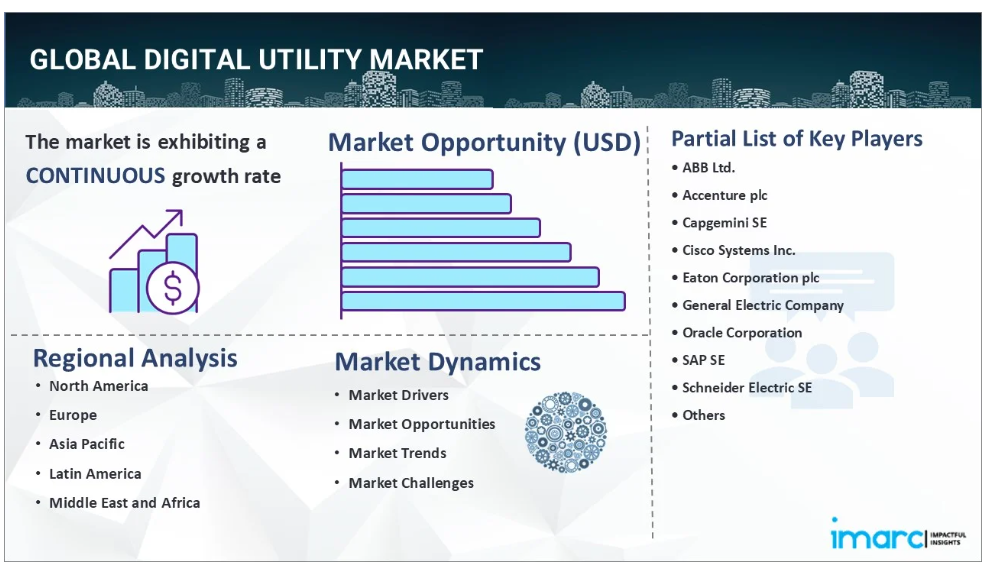
1 Preface 2 Scope and Methodology 3 Executive Summary 4 Global Digital Utility Market – Introduction 5 Global Digital Utility Market Landscape 6 Global Digital Utility Market – Breakup by Technology 7 Global Digital Utility Market – Breakup by Network 8 Global Digital Utility Market – Breakup by Region 9 Global Digital Utility Market – Competitive Landscape 10 Profiles of Key Players Kindly note that this only represents a partial list of companies, and the complete list has been provided in the report. 11 Global Digital Utility Market – Industry Analysis 12 Strategic Recommendations 13 Appendix |
| ※본 조사보고서 [세계의 디지털 유틸리티 시장 2025-2033] (코드 : IMA8339MU883) 판매에 관한 면책사항을 반드시 확인하세요. |
| ※본 조사보고서 [세계의 디지털 유틸리티 시장 2025-2033] 에 대해서 E메일 문의는 여기를 클릭하세요. |
※당 사이트에 없는 자료도 취급 가능한 경우가 많으니 문의 주세요!